
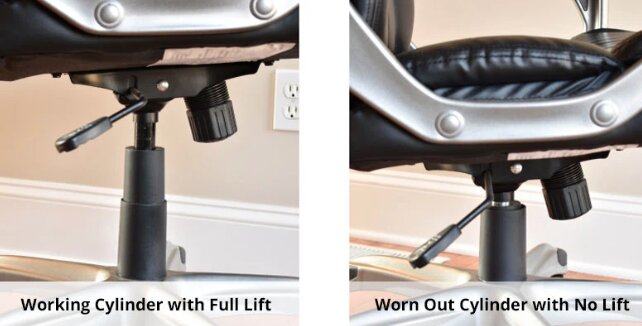
Few office chair problems are more frustrating than sitting down at the correct height only to find yourself slowly sinking throughout the day. If your office chair keeps lowering on its own, the issue almost always points to a failing gas lift cylinder or a problem within the chair’s height adjustment mechanism.
The good news is that many cases can be fixed temporarily, and a permanent solution is often simpler than most people expect. This guide explains why an office chair keeps lowering, how to diagnose the exact cause, temporary fixes that work, and when replacing parts makes more sense than replacing the entire chair.
Why Does an Office Chair Keep Lowering?
Most modern office chairs use a pneumatic gas lift cylinder to control seat height. This cylinder contains compressed gas that supports your weight and allows height adjustments.
When the cylinder begins to fail, it can no longer maintain pressure properly. As a result, the chair slowly sinks while you’re sitting in it.
Common causes include:
- Worn gas lift cylinder
- Damaged cylinder seals
- Faulty height adjustment lever
- Excessive weight load
- Manufacturing defects
- Normal wear and tear from years of use
In most situations, the gas cylinder is the primary culprit.
How an Office Chair Gas Lift Cylinder Works
Understanding how the mechanism works makes troubleshooting much easier.
Compressed Gas Supports the Chair
Inside the cylinder is compressed nitrogen gas. When you raise or lower the chair, a valve opens temporarily, allowing pressure adjustments.
When the valve closes, the gas pressure holds the chair at the selected height.
Internal Seals Maintain Pressure
Rubber seals inside the cylinder prevent gas from escaping.
Over time, these seals deteriorate due to:
- Age
- Temperature changes
- Daily use
- Dust contamination
- Manufacturing quality
Once the seals begin leaking, the cylinder gradually loses pressure and the chair starts sinking.
The Valve Controls Height Adjustment
The height adjustment lever activates a small valve inside the cylinder.
If the valve remains partially open because of wear or improper adjustment, the chair may lower continuously even if the cylinder itself is still functional.
Signs Your Office Chair Cylinder Is Failing
Several symptoms indicate a worn gas lift cylinder.
The Chair Slowly Sinks While Sitting
This is the most common symptom.
You adjust the chair to your preferred height, sit down, and within minutes or hours the seat gradually drops lower.
The Chair Won’t Stay at Maximum Height
A failing cylinder often struggles to remain fully extended.
The chair may initially rise but slowly sink back down.
Frequent Height Readjustments
If you’re constantly raising your chair throughout the day, the cylinder likely can no longer maintain pressure.
Sudden Height Drops
Advanced cylinder failure may cause abrupt drops rather than gradual sinking.
This usually means internal seals have deteriorated significantly.
Difficulty Adjusting Height
Some failing cylinders become difficult to raise or lower due to internal damage.
Common Causes of an Office Chair That Keeps Lowering
Normal Wear and Tear
Gas cylinders are consumable components.
Most office chair cylinders last:
- 5 to 10 years with normal use
- 3 to 5 years with heavy daily use
- Longer in premium commercial chairs
Eventually, all gas cylinders wear out.
Poor Quality Components
Budget office chairs often use lower-grade cylinders that fail sooner.
Low-cost cylinders may use:
- Thinner steel
- Inferior seals
- Lower pressure ratings
- Less durable valve mechanisms
Excess Weight Capacity
Every office chair has a maximum weight rating.
Regularly exceeding this rating accelerates cylinder wear and can lead to premature failure.
Heavy Daily Usage
A chair used eight to twelve hours daily experiences far more stress than one used occasionally.
High-use environments include:
- Home offices
- Call centers
- Gaming setups
- Commercial offices
Manufacturing Defects
Although less common, some cylinders fail much earlier than expected due to defects in seals or internal components.
If a relatively new chair begins sinking, warranty coverage may apply.
How to Diagnose the Problem
Before purchasing replacement parts, confirm the actual cause.
Test the Height Adjustment Lever
Raise the chair fully and release the lever.
If the lever feels loose or fails to return completely, it may be holding the valve partially open.
Inspect for:
- Bent linkage
- Loose screws
- Broken plastic parts
- Misalignment
Check for Visible Damage
Look underneath the seat.
Inspect:
- Cylinder housing
- Adjustment mechanism
- Lever assembly
- Mounting brackets
Visible damage can indicate a mechanical issue rather than cylinder failure.
Observe Sinking Speed
The speed of height loss provides useful clues.
Slow sinking often indicates seal wear.
Rapid sinking may indicate:
- Major seal failure
- Valve malfunction
- Internal cylinder damage
Compare Loaded and Unloaded Behavior
Raise the chair without sitting on it.
If it stays elevated when empty but sinks under your weight, the cylinder has likely lost sufficient pressure.
Temporary Fixes for an Office Chair That Keeps Lowering
If you need an immediate solution, several temporary fixes can prevent further sinking.
Use a PVC Pipe Spacer
This is one of the most popular temporary repairs.
How It Works
A PVC pipe section is cut and placed around the exposed cylinder shaft.
The pipe physically prevents the chair from lowering.
Advantages
- Inexpensive
- Easy to install
- Highly effective
- No special tools required
Disadvantages
- Eliminates height adjustment
- Temporary solution only
- May affect chair appearance
Install a Hose Clamp
Some users secure a metal hose clamp around the cylinder shaft.
When tightened properly, the clamp helps support the chair’s height.
However, results vary depending on cylinder design.
Use Multiple Zip Ties
Heavy-duty zip ties can sometimes hold the chair at a fixed position.
This method works best as a short-term emergency solution.
Add a Commercial Cylinder Repair Kit
Several repair kits are available specifically for sinking office chairs.
These products typically lock the cylinder at a chosen height.
While effective, they do not restore normal cylinder function.
How to Permanently Fix a Sinking Office Chair
The most reliable repair is replacing the gas lift cylinder.
Why Cylinder Replacement Is the Best Solution
Replacing the cylinder:
- Restores full height adjustment
- Eliminates sinking
- Extends chair lifespan
- Costs significantly less than a new chair
Most replacement cylinders cost far less than a quality office chair.
Determine Cylinder Compatibility
Before ordering a replacement, verify:
- Cylinder length
- Stroke range
- Weight capacity
- Chair compatibility
Many office chairs use standardized cylinders, but confirming measurements prevents fitment issues.
Remove the Old Cylinder
The cylinder is usually press-fit into both:
- The chair base
- The seat mechanism
Removal often requires:
- Rubber mallet
- Pipe wrench
- Penetrating lubricant
Older chairs may require additional force because the components become tightly wedged together over time.
Install the New Cylinder
Installation is straightforward.
Typically:
- Insert the cylinder into the chair base.
- Reattach the seat mechanism.
- Sit in the chair to secure the fit.
The chair’s weight naturally locks the components together.
Can You Repair a Gas Lift Cylinder Instead of Replacing It?
In most cases, no.
Gas lift cylinders are sealed units designed for replacement rather than repair.
Why Repairs Rarely Work
Internal components are not intended to be serviced.
Problems include:
- High internal pressure
- Specialized seals
- Safety concerns
- Limited access to components
Even if disassembled successfully, restoring original performance is difficult.
Replacement Is Usually Cheaper
Considering labor and parts, replacing the cylinder is almost always the most economical solution.
When Should You Replace the Entire Chair?
Sometimes replacing the chair makes more sense than replacing the cylinder.
Multiple Components Are Failing
If the chair also has:
- Torn upholstery
- Broken armrests
- Worn casters
- Cracked base
- Faulty tilt mechanism
Investing in repairs may not be worthwhile.
The Chair Is Very Old
Older chairs often experience multiple failures simultaneously.
A new ergonomic chair may provide better value and comfort.
Parts Are Unavailable
Certain proprietary office chairs use unique components that can be difficult to source.
In these situations, replacement may be the more practical option.
How to Prevent an Office Chair From Lowering Again
Proper maintenance can maximize cylinder lifespan.
Stay Within Weight Limits
Always follow the manufacturer’s recommended weight capacity.
Exceeding limits places excessive stress on the cylinder.
Avoid Sudden Impacts
Dropping into the chair repeatedly creates shock loads that accelerate wear.
Sitting down gently helps preserve internal components.
Keep the Cylinder Clean
Dust and debris can affect moving parts over time.
Occasionally wipe the exposed cylinder shaft with a soft cloth.
Purchase Higher-Quality Chairs
Premium office chairs often use higher-grade cylinders that last significantly longer.
Commercial-grade chairs are generally built for heavier daily usage.
Address Problems Early
A chair that begins sinking slightly often worsens over time.
Replacing a failing cylinder early can prevent additional stress on other chair components.
Frequently Asked Questions
Why does my office chair sink only when I sit in it?
This usually indicates the gas lift cylinder can no longer support your weight under load. The cylinder may still hold position when unoccupied but fails once pressure increases.
Is a sinking office chair dangerous?
Generally, a sinking chair is more annoying than dangerous. However, sudden height drops can cause discomfort, poor posture, and unexpected movement during work.
How long do office chair cylinders last?
Most quality cylinders last between 5 and 10 years, depending on usage, weight load, and manufacturing quality.
Are office chair cylinders universal?
Many office chairs use standardized gas cylinders, but dimensions and stroke lengths vary. Always verify compatibility before purchasing a replacement.
Is replacing a gas cylinder difficult?
Most users can complete the replacement with basic tools. The biggest challenge is usually removing the old cylinder from the chair base and seat mechanism.
Final Thoughts
If your office chair keeps lowering, the gas lift cylinder is almost always the source of the problem. Internal seal wear eventually causes pressure loss, preventing the chair from maintaining its selected height.
Temporary solutions such as PVC spacers, hose clamps, and repair kits can stop the sinking for a while, but they don’t restore proper functionality. For a long-term fix, replacing the gas lift cylinder is usually the most effective and cost-efficient solution.
By diagnosing the issue correctly, replacing worn components when necessary, and following basic maintenance practices, you can restore proper chair performance and avoid the frustration of constantly readjusting your seating position throughout the workday.