
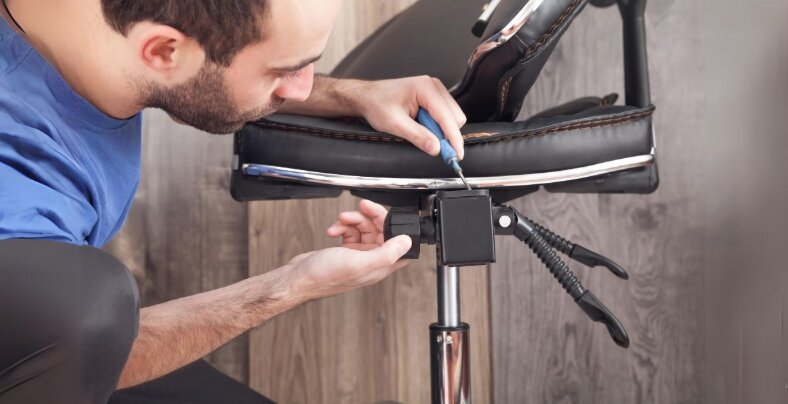
A wobbly office chair is more than a minor annoyance. It affects posture, reduces focus, and can lead to long-term discomfort or even injury if ignored. The issue usually comes from wear in key mechanical parts or simple loosening over time—but the exact cause depends on where the instability is coming from.
This guide breaks down the real reasons an office chair becomes wobbly, how to pinpoint the issue quickly, and how to fix it without guesswork.
Quick Diagnosis: What “Wobbly” Actually Means
Not all chair wobble is the same. Identifying the type of movement helps narrow down the cause.
Side-to-side wobble
- Chair rocks left and right when sitting still
- Often linked to a loose base, gas cylinder wear, or broken tilt mechanism
Front-to-back rocking (uncontrolled)
- Chair leans forward or backward without engaging tilt lock
- Usually tied to the tilt mechanism or seat plate failure
Height instability wobble
- Chair sinks slightly or feels unstable at a fixed height
- Common sign of a failing gas lift cylinder
Rotational looseness
- Chair spins unevenly or feels “off-center”
- Often caused by base damage or worn internal cylinder bushings
Understanding the pattern helps eliminate unnecessary repairs.
Common Causes of a Wobbly Office Chair
Most wobbling issues come from mechanical wear, fasteners loosening over time, or structural fatigue.
Loose screws and fasteners
One of the most common and easiest-to-fix causes.
Office chairs use multiple connection points:
- Seat plate bolts
- Armrest screws
- Backrest mounting points
- Base-to-cylinder connection
Over time, repeated movement and pressure loosen these fasteners.
Symptoms:
- Mild wobble when shifting weight
- Clicking or creaking sounds
- Movement localized to one part of the chair
Even a small amount of looseness can create noticeable instability.
Worn gas cylinder (pneumatic lift failure)
The gas cylinder controls height adjustment and supports vertical load. When it wears out internally, stability is compromised.
Symptoms:
- Chair slowly sinks while sitting
- Slight vertical bounce or “springy” feeling
- Wobble increases at mid-height positions
Inside the cylinder, nitrogen gas pressure gradually leaks or seals degrade. Once this happens, no tightening will fully fix the wobble.
Damaged or cracked chair base
The five-star base is responsible for distributing weight evenly. It is usually made of plastic, nylon, aluminum, or steel.
Symptoms:
- Visible cracks near the center hub or leg joints
- Uneven contact with the floor
- Noticeable tilt even when stationary
Plastic bases are especially prone to stress fractures over time, particularly under heavier use or uneven flooring.
Caster (wheel) issues
Casters are often overlooked, but they directly affect balance.
Symptoms:
- Chair rocks when rolling or shifting direction
- One wheel sits higher than others
- Grinding or sticking sensation when moving
Common causes include:
- Hair or debris buildup
- Bent wheel stems
- Uneven wear across wheels
Even one faulty caster can destabilize the entire chair.
Seat plate or tilt mechanism wear
The seat plate connects the seat to the gas cylinder and controls tilt functionality.
Symptoms:
- Uncontrolled rocking or leaning
- Tilt lock not holding position
- Side-to-side play near the seat base
This is a critical structural component. Once worn, the chair may feel unsafe or “loose” even if everything else is tight.
Uneven flooring
Sometimes the chair is fine—the floor is not.
Symptoms:
- Wobble changes depending on location
- One side of chair always feels higher
- No mechanical looseness found during inspection
Carpet compression, sloped flooring, or uneven tiles can create the illusion of a faulty chair.
How to Identify the Exact Source of the Wobble
A structured diagnostic approach prevents unnecessary part replacements.
Step 1: Test without sitting
Push each armrest and the backrest lightly:
- If movement occurs → structural looseness
- If stable → move to next step
Step 2: Check base stability
Lift chair slightly and rotate it:
- Look for cracks in base legs
- Check if any caster is tilted or loose
Step 3: Test gas cylinder movement
Sit and stand repeatedly:
- If height shifts unexpectedly → cylinder issue likely
Step 4: Isolate seat plate movement
Sit still and lean slightly:
- If wobble comes from under seat → tilt mechanism or seat plate
Step 5: Remove casters if needed
If uncertain:
- Remove wheels and test stability on flat surface
This isolates whether the issue is below or above the cylinder.
How to Fix a Wobbly Office Chair
Fixes range from simple tightening to full part replacement depending on severity.
Tightening loose components
This should always be the first step.
Tools needed:
- Allen wrench (usually included with chair)
- Adjustable wrench or screwdriver
What to check:
- Armrest bolts
- Seat plate screws
- Backrest connection points
- Base mounting bolts
Method:
- Flip chair upside down
- Tighten all visible fasteners in sequence
- Avoid over-tightening plastic components (can strip threads)
Often this alone resolves minor wobble issues.
Replacing a worn gas lift cylinder
If the chair sinks or feels unstable vertically, replacement is required.
Signs replacement is necessary:
- Chair won’t hold height
- Noticeable bounce when sitting
- Persistent wobble after tightening
General process:
- Remove chair seat from cylinder
- Detach cylinder from base
- Install new compatible cylinder
- Reassemble and test height lock
This is one of the most effective long-term fixes for mid-range chairs.
Replacing base or casters
If structural damage is present, repair is not sufficient.
Base replacement
- Check material type (plastic, nylon, aluminum)
- Ensure correct diameter for cylinder fit
- Replace if cracks or instability exist
Caster replacement
- Pull out damaged wheels from base sockets
- Push in new compatible casters
- Ensure all wheels match in height and type
Mixing worn and new casters often worsens wobble.
Fixing tilt mechanism issues
Tilt mechanism failure is more complex.
Symptoms requiring replacement:
- No resistance when leaning back
- Chair tilts unevenly
- Locking mechanism fails
Fix approach:
- Remove seat plate assembly
- Replace entire tilt mechanism unit if worn
- Reattach securely with all bolts aligned
In most cases, full replacement is more reliable than repair.
Temporary fixes (short-term stability)
These do not solve the root cause but can stabilize a chair temporarily.
- Add rubber washers to loose joints
- Use thread-locking adhesive on bolts
- Place chair on anti-slip mat
- Replace only the most worn caster first
Temporary fixes should only be used while waiting for parts.
When Repair Is No Longer Worth It
At a certain point, replacement becomes more practical than repair.
Consider replacing the chair if:
- Multiple structural components are worn
- Base and gas cylinder both show failure
- Repair cost exceeds 50–60% of replacement cost
- Chair is more than 5–7 years old with heavy use
A failing chair often develops cascading issues—fixing one part may not restore full stability.
How to Prevent Office Chair Wobble
Prevention reduces wear and extends lifespan significantly.
Regular tightening schedule
- Check bolts every 3–6 months
- Focus on seat plate and armrests
Proper weight distribution
- Avoid leaning excessively on one side
- Don’t use armrests to push yourself up repeatedly
Clean casters regularly
- Remove hair and dust buildup monthly
- Ensure smooth rolling reduces stress on base
Use appropriate flooring protection
- Chair mats reduce uneven pressure on casters
- Prevents micro-stress fractures in base legs
Avoid extreme height positioning
- Fully extended gas cylinders wear faster
- Keep height within stable mid-range when possible
Safety Considerations
A wobbly chair is not just inconvenient—it can become unsafe.
Potential risks include:
- Sudden collapse of gas cylinder
- Base snapping under uneven load
- Loss of balance leading to falls
If wobble worsens quickly, discontinue use until repaired.
Final Thoughts
A wobbly office chair almost always comes down to one of five issues: loose fasteners, gas cylinder wear, base damage, caster problems, or tilt mechanism failure. The key is diagnosing correctly before replacing parts.
Simple tightening fixes a surprising number of cases. For deeper structural issues, replacing the gas lift or base restores stability and extends usable life significantly.
A stable chair is not just about comfort—it directly affects posture, productivity, and long-term joint health.